The short answer
Porcelain veneers are usually applied over several visits: a consultation and plan, a preparation visit where a thin layer of enamel is removed and the teeth are scanned, and a fitting visit where each veneer is checked and bonded in place. At Aesthetic Laser Dentistry in Airport West, the proposed shape is designed digitally and tried in your mouth as a trial smile before any permanent work begins.
What are porcelain veneers?
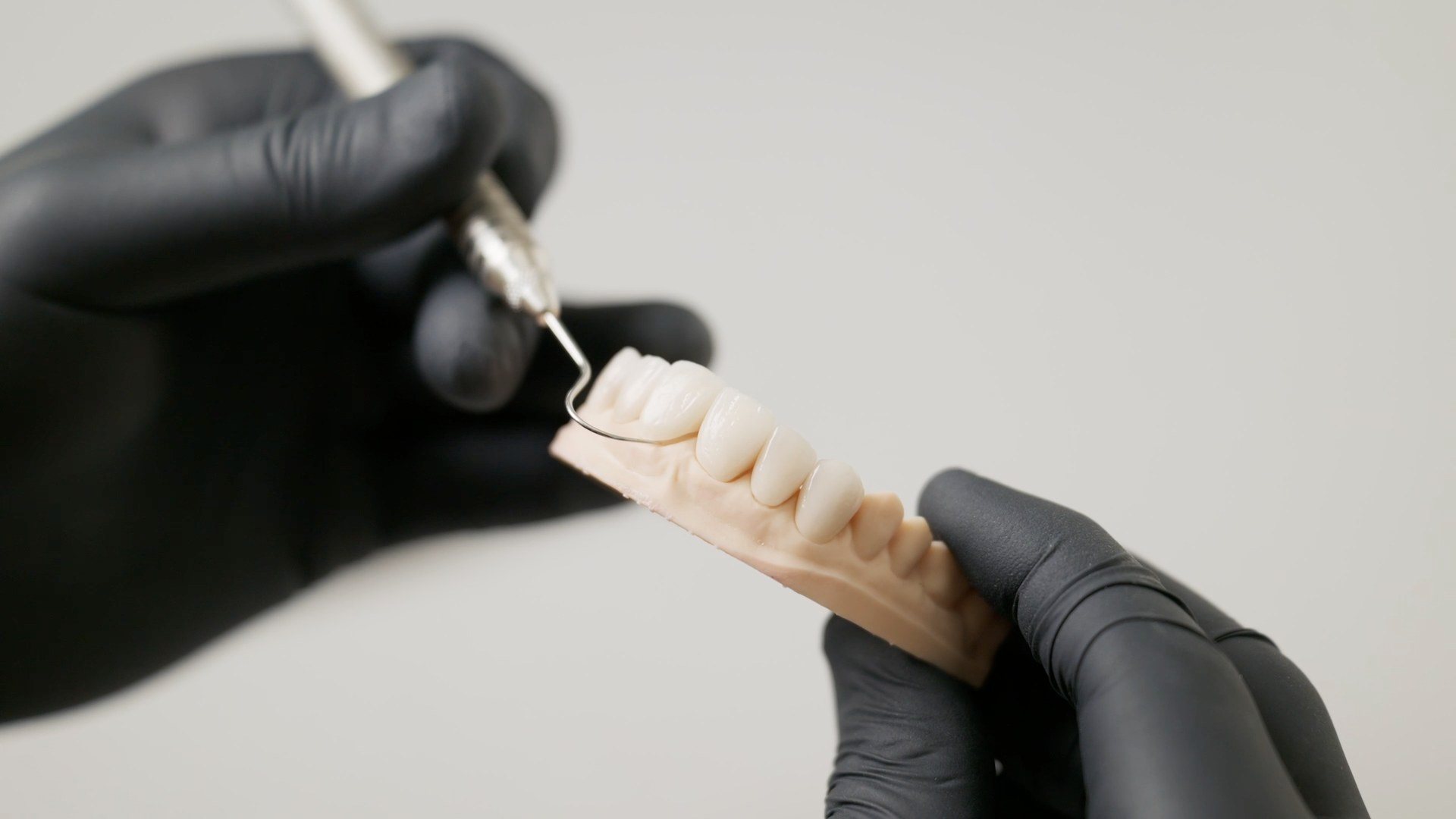
Porcelain veneers are thin ceramic facings made to cover the front surface of the teeth. They are made in a dental laboratory and bonded to the teeth, and they can change the shape, colour and size of teeth. Whether they suit you depends on your teeth and bite, which your dentist will assess first.
Veneers can also be made from composite resin, which is shaped directly on the teeth, often in one visit. Compared with porcelain veneers, composite veneers usually need less shaping of the tooth, cost less and can often be done in one visit. They are less durable and may need repair or replacement sooner. Read more about composite veneers and bonding.
Who are porcelain veneers suited to?
Veneers are one option for people concerned about:
- chipped, worn or uneven front teeth
- discolouration that does not lift with whitening
- small gaps, or teeth that are an unusual shape or size
They are not always the first option. Depending on your teeth, teeth whitening, composite bonding or clear aligners may suit you better, and your dentist will talk through each one.
1
Step 1: Consultation and planning
Your first visit is a conversation and an examination. Your dentist asks what you would like to change, checks your teeth, gums and bite, and takes X-rays, photos and a 3D scan of your teeth.
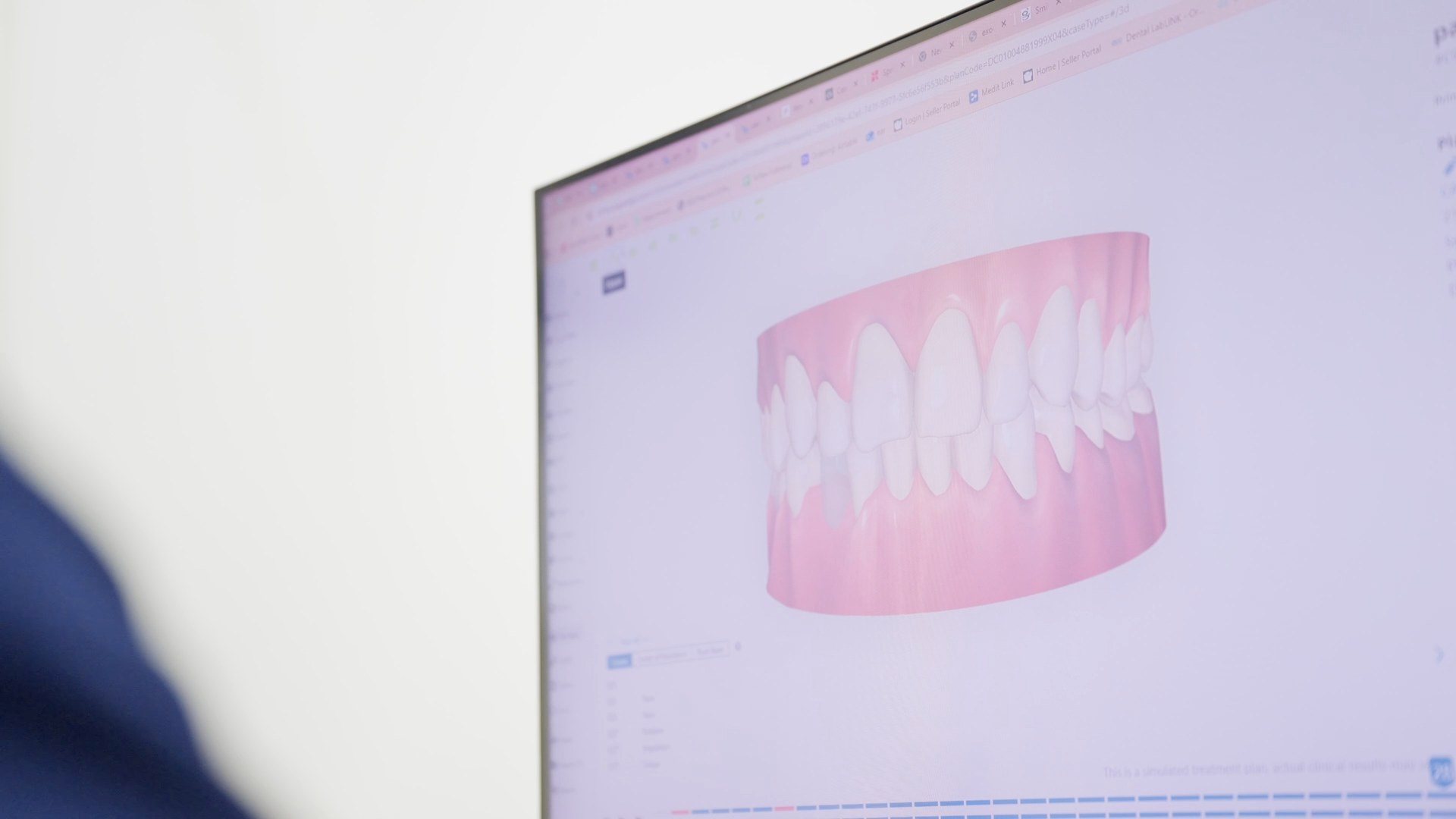
From these records, a proposed shape for your new teeth is designed on screen with digital smile design, in proportion with your face. The design is then tried in your mouth as a trial smile, a temporary mock-up, so you can see and feel the proposed shape before anything permanent is done. We use digital design software to create a preview of the proposed smile. The preview is a planning guide, and your result may differ.
You will also hear about the risks and receive a written quote, and you can take as long as you need to decide.
2
Step 2: Preparing the teeth
A veneer cannot simply be glued over the front of a tooth. Porcelain veneers can be made very thin, but most still need a thin layer of enamel removed first, and this change is permanent.
The teeth are numbed with local anaesthetic, and the dentist shapes each tooth to make room for its veneer. A new scan is taken and sent to the dental laboratory, which makes the veneers to the agreed design. This usually takes around two to four weeks.
3
Step 3: Fitting the veneers
This third step is when the veneers are fitted. Before anything is bonded, your dentist places each veneer on its tooth to check the fit, the shape and the colour, and makes small adjustments where needed.
Each tooth is then cleaned and prepared, the veneer is bonded with a dental cement, and a curing light sets the cement. Your dentist removes any excess cement and checks your bite, adjusting individual veneers if they touch unevenly.
4
Step 4: Review
Your dentist may ask you to return after a few weeks to check how the veneers have settled and that your gums are healthy around them.
How do I look after porcelain veneers?
- Brush twice a day and clean between your teeth every day, as you would with natural teeth.
- Keep up regular check-ups and cleans, so your dentist can check the veneers and the gums around them.
- Avoid biting hard objects such as ice, pens or fingernails, which can chip porcelain.
- If you grind or clench your teeth, ask your dentist whether you need a night guard.
- Porcelain resists staining from food and drinks better than natural tooth enamel, but coffee, tea and red wine can still stain your natural teeth and the edges around veneers. See foods that stain your teeth.
Porcelain is durable and resists staining, and with good care veneers can last many years.
What are the risks of porcelain veneers?
Like any dental treatment, veneers carry risks. They include:
- permanent removal of tooth structure: once prepared, the teeth will always need to be covered
- tooth sensitivity, sometimes long-term
- chipping, fracture or debonding of a veneer
- gum irritation, or gum recession that shows the edges of the veneer
- rarely, damage to the tooth nerve that needs root canal treatment
- replacement in the future because of wear, damage or decay around the edges
Your dentist will explain the risks that apply to you. See dental treatment risks for more.
Will my health fund cover veneers?
It depends on your fund and level of cover. Many funds pay less for cosmetic treatment than for restorative treatment, so check with your fund using the item numbers on your written quote. HICAPS claims are made on the day, and humm payment plans are available.

About the reviewing dentist
Dr James Bartalotta is a principal dentist at Aesthetic Laser Dentistry with a special interest in aesthetic and rehabilitative dentistry. He holds a Master of Dentistry from La Trobe University and a Postgraduate Diploma in Aesthetic and Restorative Dentistry (ACDP), and he lectures to dentists on composite bonding and veneers as a Key Opinion Leader for Kerr and SDI (industry roles). He is registered as a general dentist (AHPRA registration DEN0002229514).
Questions about porcelain veneers
How many visits do porcelain veneers take?
Usually three or more: a consultation and planning visit (including the trial smile), a preparation visit, and a fitting visit around two to four weeks later. A short review visit may follow. Your dentist will give you a timeline for your own plan.
Does having veneers fitted hurt?
The teeth are numbed with local anaesthetic for the preparation visit, so many people feel pressure rather than pain. Some people notice sensitivity for a few days afterwards. Tell us if it lasts longer.
How long do porcelain veneers last?
Porcelain is durable and resists staining, and with good care veneers can last many years. How long yours last depends on your bite, habits such as grinding, and how well the teeth and gums are looked after. Veneers may eventually need replacing.
Can porcelain veneers be removed?
Not in the sense of going back. Because a layer of enamel is removed to fit them, the prepared teeth will always need to be covered by a veneer or crown. This is one reason we plan carefully and show you a trial smile first.
Should I choose porcelain or composite veneers?
Both are offered at the practice. Composite veneers are usually shaped directly on the teeth, while porcelain veneers are made in a dental laboratory. Which suits you depends on your teeth, your bite, your budget and your preferences, and is worked out at a consultation.