
Laser dentistry in Airport West
Laser treatment for gums, soft tissue and tongue-ties, led by Dr Philip Hand.
Aesthetic Laser Dentistry in Airport West uses Fotona dental lasers for tongue-tie and lip-tie release, gum treatment, gum recontouring, gum depigmentation and NightLase snoring treatment. Laser treatment at the practice is led by Dr Philip Hand, who has used dental lasers since 2010 and holds an International Master’s Degree in Laser Dentistry.
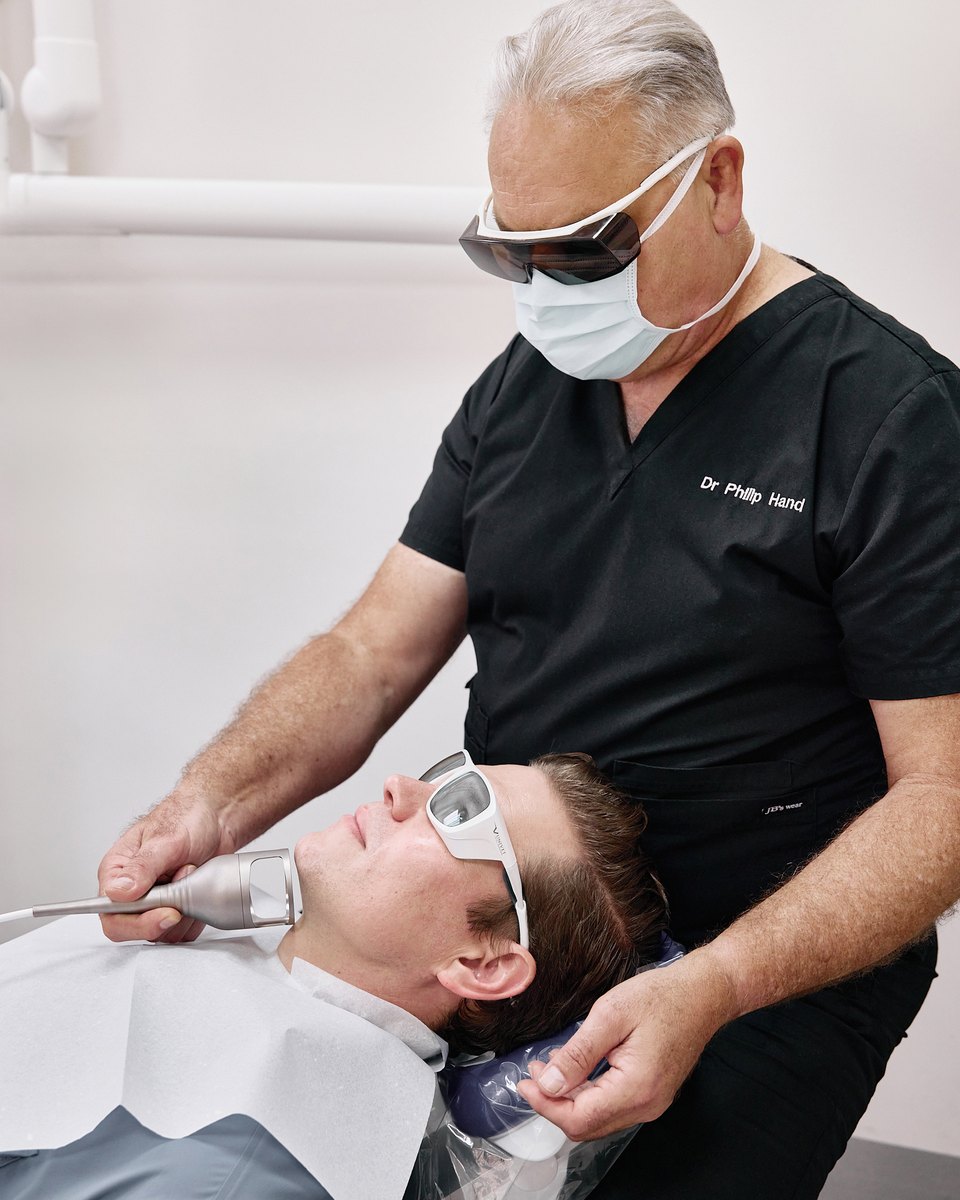
Laser dentistry since 2010
Led by Dr Philip Hand
Master’s in Laser Dentistry
Università Cattolica del Sacro Cuore, Rome
Teaching other dentists
Laser use, in Australia and overseas
Fees quoted after a consultation
HICAPS on the day, humm payment plans
What is laser dentistry?
Laser dentistry uses a focused beam of light energy for a range of dental procedures. The beam removes or reshapes tissue in a small, targeted area, which lets the dentist work closely around the tissue being treated.
For some procedures, a laser can be used instead of, or alongside, a drill or scalpel. Your dentist will explain when a laser suits your treatment and when a conventional approach fits better.
What a laser can offer, compared with a scalpel or drill
Depending on the procedure, laser treatment can offer:
Less bleeding than a scalpel during some soft tissue procedures
Less need for local anaesthetic for some procedures
Often no stitches after soft tissue procedures
How much difference this makes depends on the procedure and on you.
What the laser is used for at the practice.
Each treatment has its own page, with how it works, recovery, risks and questions to ask. Your dentist explains whether a laser suits your treatment at a consultation.
Tongue-tie and lip-tie release
Laser release for babies, children and adults. Babies need a referral from a lactation consultant, maternal health nurse or doctor.
Treatment of soft tissues
A laser can be used to reshape the gum line, treat some mouth lesions and remove overgrown gum tissue.
Gum depigmentation
A laser can remove a very thin layer of gum to lighten dark patches of pigment. This is known as laser gum depigmentation.
NightLase snoring treatment
A Fotona laser treatment for the soft tissue at the back of the mouth. Oral appliances for sleep apnoea are on the same page.
Gum disease treatment
Used alongside a deep clean, a laser can treat infected gum pockets while leaving the healthy gum around them alone. Your dentist explains whether it suits your gums.
Tooth decay
For some small cavities, a laser can remove the decay in place of a drill, keeping as much healthy tooth as possible. Some of these can be done without an injection, and your dentist will tell you if yours can.
Pain relief
A low-power laser can be used to help settle some mouth ulcers and some kinds of tooth sensitivity. Ask at your visit whether it suits you.
Which lasers does the practice use?
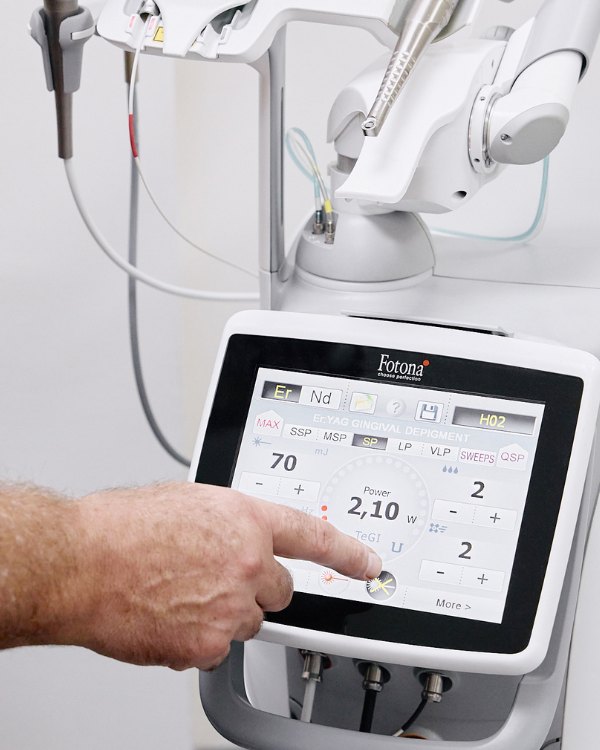
The practice has multiple lasers for different applications, on hard and soft tissue: a Fotona LightWalker, which combines an erbium laser and an Nd:YAG laser, and several diode lasers. Each type of laser serves a specific purpose in laser dentistry, and the choice depends on the procedure’s requirements.
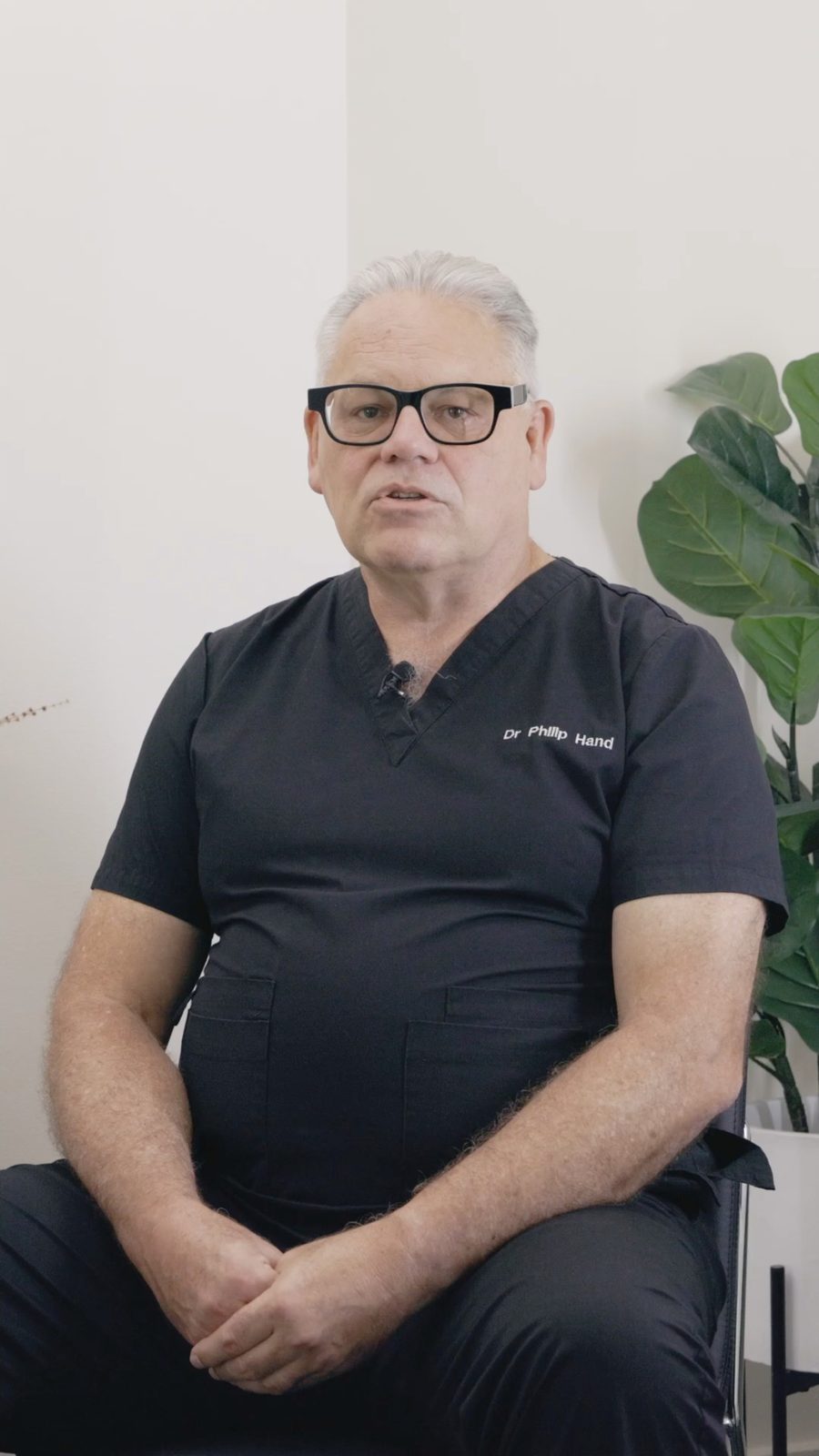
Dr Philip Hand explains how the practice uses its Fotona lasers.
Erbium lasers
Erbium lasers are used for the precise removal of hard and soft tissues, with little heat reaching the surrounding tissue.
Nd:YAG lasers
Nd:YAG lasers reach deeper into soft tissue. Dentists use them in gum treatment to help seal and clean the pockets around teeth.
Diode lasers
Dentists mainly use diode lasers for soft tissue procedures. They can precisely cut or coagulate tissue, making them suitable for gum contouring, lesion removal, and managing soft tissue conditions like oral ulcers.
What happens during laser treatment.
The steps are much the same for most laser procedures. Your dentist tells you what to expect for yours.
1
Consultation
One of our dentists sees you first, examines the area, reviews your medical history and explains whether a laser suits the procedure.
2
Preparation
Everyone in the room, including you, wears protective glasses. If a procedure is likely to be uncomfortable, we numb the area first.
3
Laser application
Your dentist aims the laser at the area being treated. The laser may make a clicking sound, but it does not vibrate like a drill. If the procedure is likely to be uncomfortable, we numb the area first. Some laser procedures need less local anaesthetic, or none.
4
Recovery
Recovery depends on the procedure, and we will tell you what to expect and give you aftercare instructions.
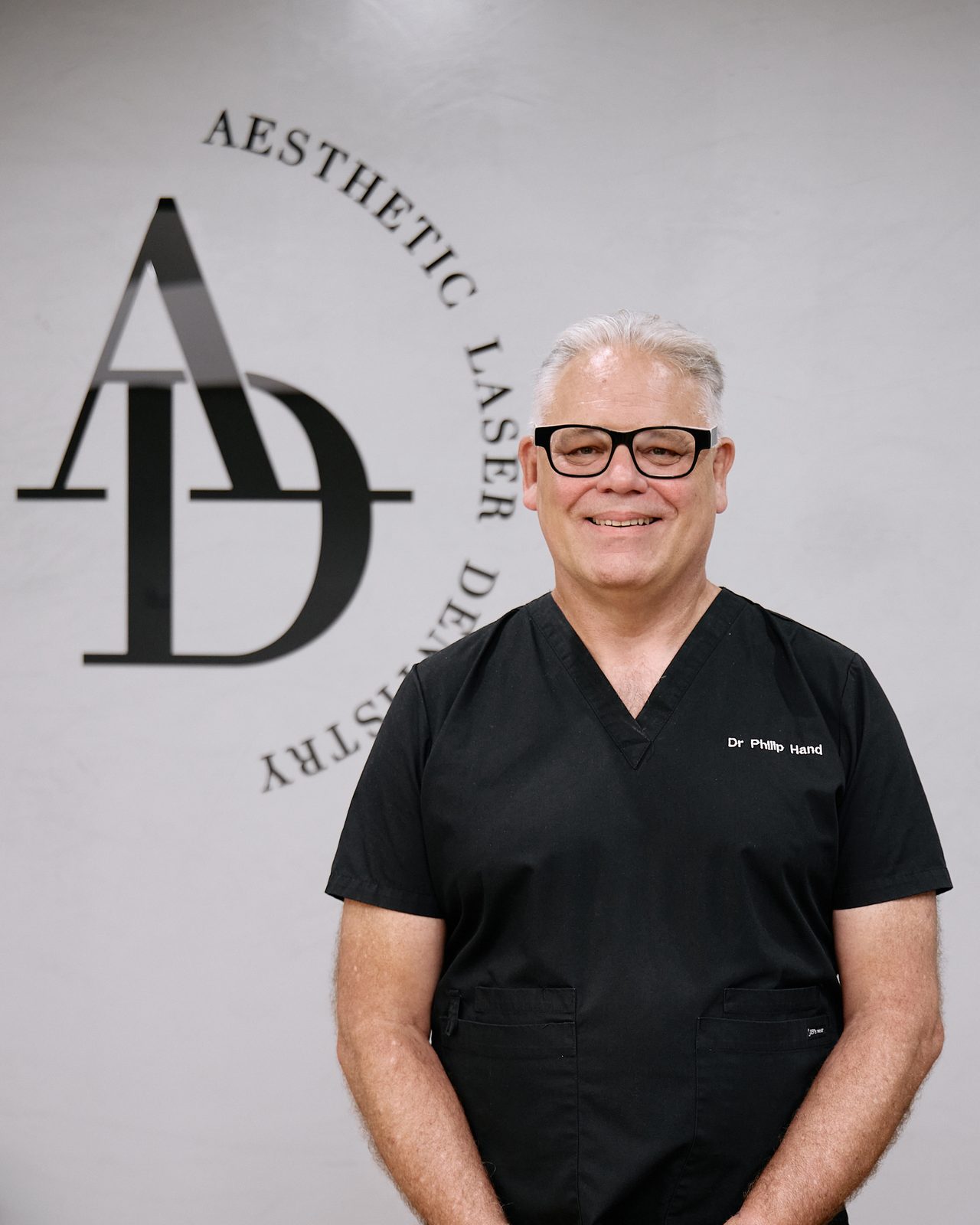
Your dentist
Laser dentistry with Dr Philip Hand
Principal dentist
Dr Hand is a principal dentist at the practice and has been a dentist for more than 40 years. He holds general registration with the Dental Board of Australia, and laser dentistry is his area of special interest.
- International Master’s Degree in Laser Dentistry, Università Cattolica del Sacro Cuore, Rome
- More than 200 hours of laser training with the Laser and Health Academy
- Laser dentistry since 2010, and trains Australian and overseas dentists in the clinical use of dental lasers
- Bachelor of Dental Surgery, University of Otago (1984), registered in Australia since 1986
- AHPRA registration DEN0000982631
Dr Hand also provides single-visit root canal treatment where suitable, and dental implants.
Laser dentistry questions.
Something not covered here? Call us on (03) 9330 2455 or email reception@aldclinic.com.au.
What are the risks of laser dentistry?
Like any procedure, laser treatment can cause discomfort, swelling, sensitivity, redness, bleeding or infection. Laser treatment at our practice is provided by dentists trained in its use, and your dentist will explain the risks that apply to your treatment before you decide.
Who performs laser treatment at Aesthetic Laser Dentistry?
Laser treatment is carried out by registered dental practitioners with training in dental lasers, and it is led by Dr Philip Hand, who has used dental lasers since 2010 and trains other dentists in their use.
Will I need a local anaesthetic?
It depends on the procedure. Some laser procedures need less local anaesthetic than conventional treatment, and some need none. If a procedure is likely to be uncomfortable, we numb the area first.
Is laser treatment less painful than a drill or scalpel?
Some laser procedures cause less discomfort than conventional methods, but this varies with the procedure and the person. Your dentist will tell you what to expect during and after your treatment.
How much does laser dentistry cost?
Fees are not published, because they depend on the procedure and how much treatment is involved. You receive a quote after an examination or consultation. HICAPS health fund claims can be made on the day, and humm payment plans are available. Any rebate depends on your fund and level of cover.
Talk to us about laser dentistry.
Book a laser dentistry consultation with Dr Philip Hand at 3/23 Louis St, Airport West. Appointments from 7:30am, Monday to Friday.