
General dentistry
Worn teeth treatment in Airport West
Rebuild what has worn away, then protect it.
Teeth can wear down over years from grinding, acid and brushing, until they look short, flat or chipped and feel sensitive. At Aesthetic Laser Dentistry in Airport West, worn teeth are restored with composite build-ups or, when the wear is advanced, full mouth rehabilitation, planned digitally and protected with a custom night splint.
The cause first
We work out why the teeth are wearing before we rebuild them
Planned digitally
Scans and a digital plan show the result before treatment
Conservative where possible
Composite build-ups keep as much natural tooth as we can
Protected afterwards
A night splint helps protect the new work
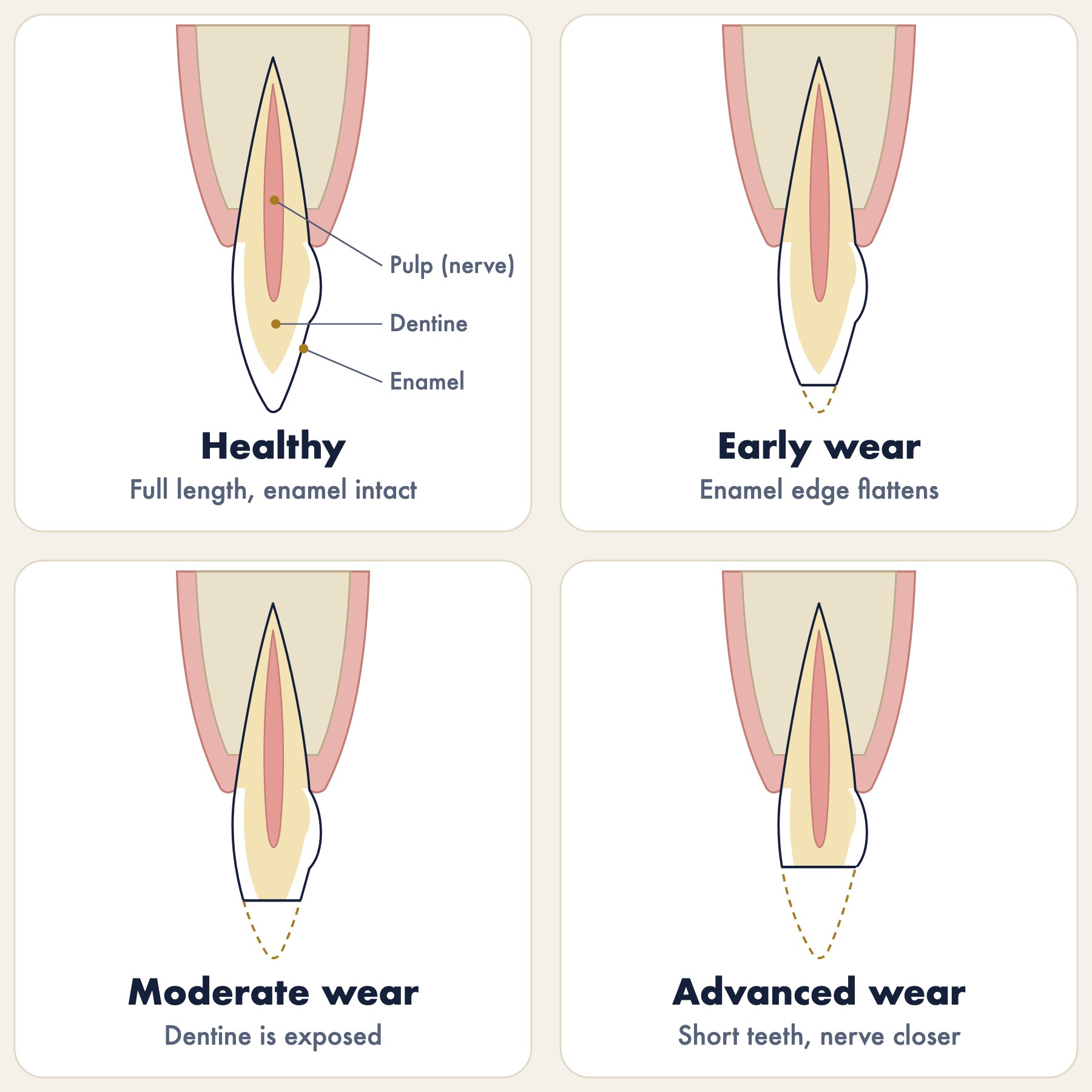
Signs your teeth are wearing.
Wear is gradual, so it is easy to miss until it is advanced.
- Front teeth that look shorter, flatter or more even
- Chipped or thin, see-through edges
- Yellow showing through where the enamel has thinned
- Teeth that are sensitive to cold, hot or sweet
- Cupped or flat biting surfaces on the back teeth
- A smile that looks older, or a face that looks shorter between nose and chin
Why teeth wear down.
There is usually more than one cause, and they add together:
- Grinding and clenching, often during sleep
- Acid from reflux, soft drinks, sports drinks, wine or citrus, which softens the enamel
- Brushing too hard, or with a hard brush or abrasive toothpaste
- Missing back teeth, which puts more load on the teeth that remain
- The way the teeth meet when you bite
How we assess worn teeth.
We look at how much wear there is, what is causing it and how fast it is happening. Then we look at four things:
- The pattern of wear on each tooth
- Your bite, and how much room there is to rebuild
- Your jaw joints and muscles
- Cracks, old fillings and sensitive teeth
Photos, scans and a digital plan show how the teeth can be rebuilt before any treatment starts.
How we restore worn teeth.
Treatment depends on how much wear there is and what is causing it. Your plan may include:
Composite build-ups
Tooth-coloured composite rebuilds worn edges and surfaces, usually without drilling healthy tooth away. It can be repaired or added to later.
Full mouth rehabilitation
When wear is advanced across many teeth, the bite is rebuilt in planned stages, tested first as a trial and then made in its final materials.
A custom night splint
Worn while you sleep to protect the rebuilt teeth from grinding.
Treating the cause
Advice on acid, brushing and grinding, and working with your doctor on reflux when needed.
A trial first
For larger cases, the planned shape can be tried in your mouth before the final work is made.
Regular reviews
We check the restorations and your splint at each visit, so small repairs stay small.
Clinical case study
Two cases treated at the practice.
Worn teeth treated by Dr James Bartalotta: front teeth rebuilt with composite, and a full mouth rehabilitation. Both were photographed before and after treatment under consistent conditions.
Worn front teeth rebuilt
Came in with: worn teeth and a collapsed bite.
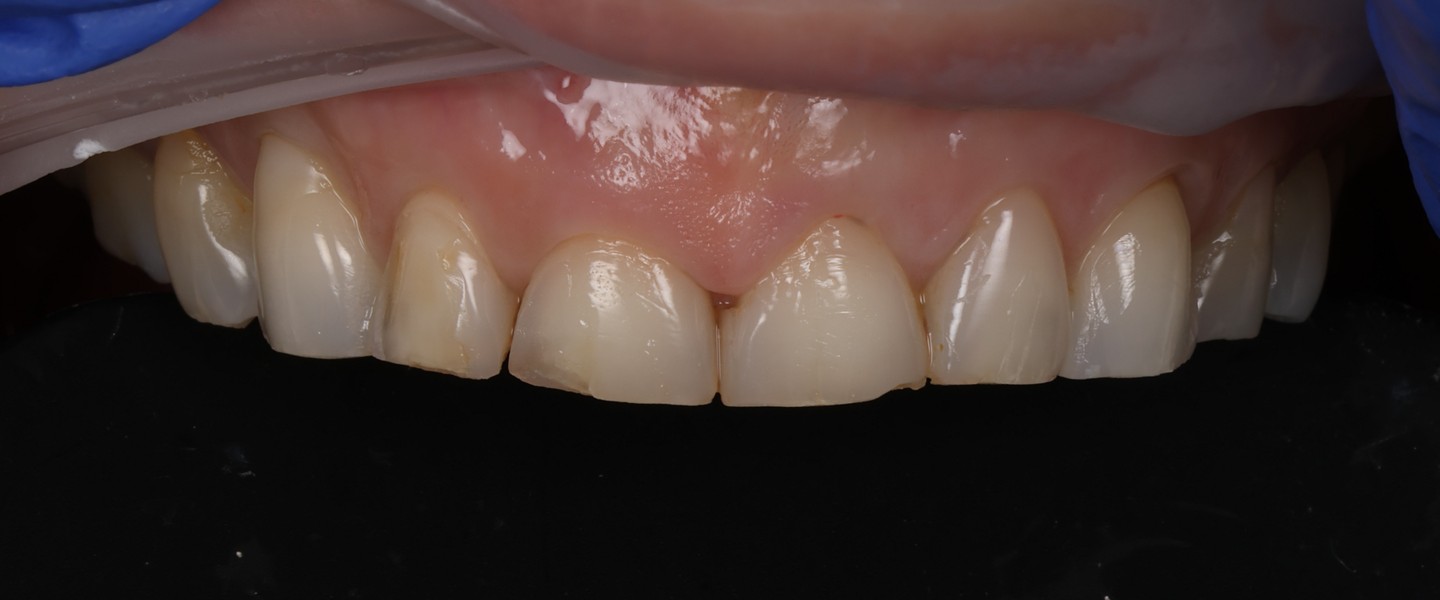
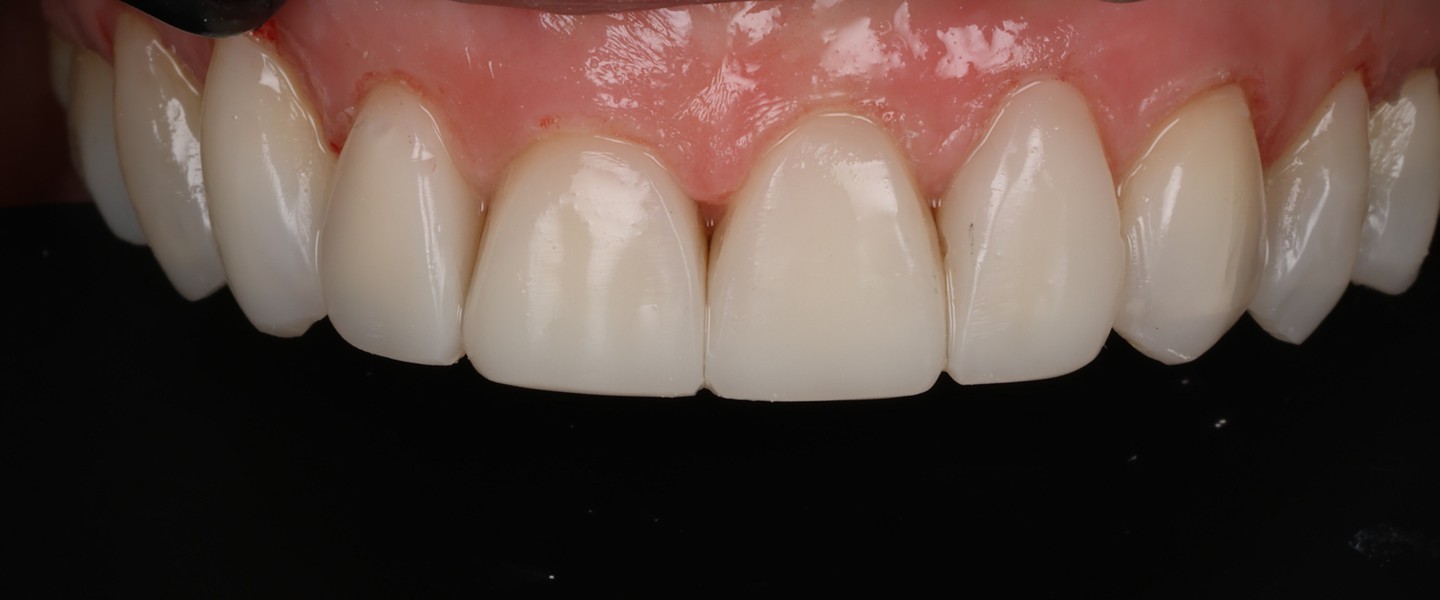
Drag the handle, or use the arrow keys, to compare
After photo taken immediately after treatment.
Full mouth rehabilitation
Came in with: a missing tooth.
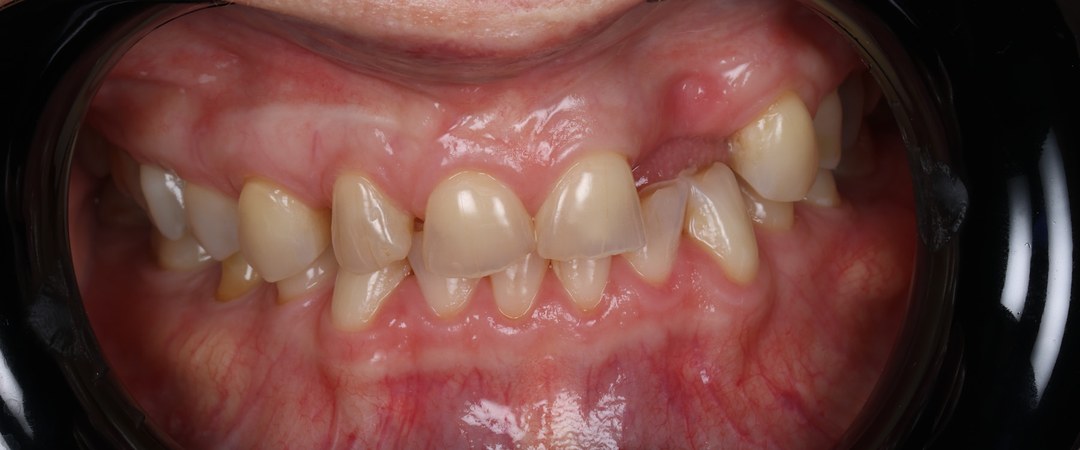
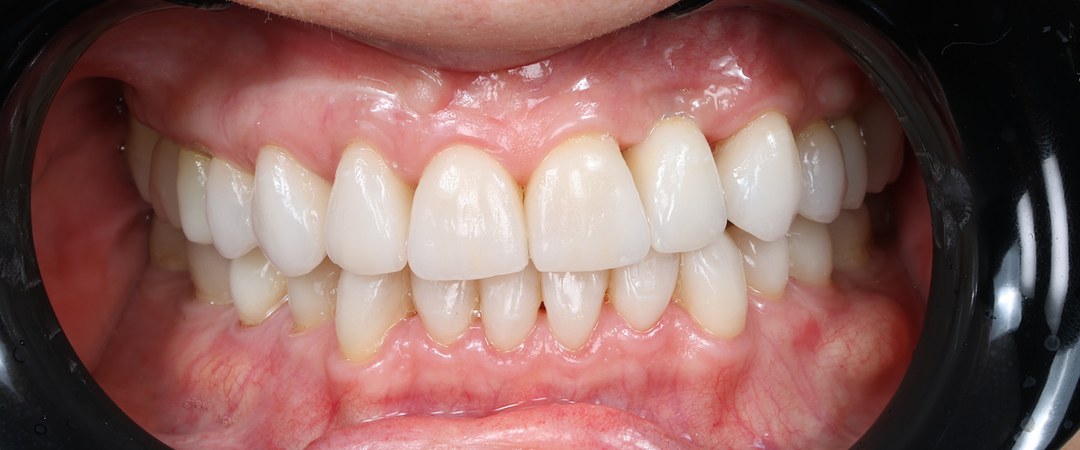
Drag the handle, or use the arrow keys, to compare
After photo taken at the completion of treatment.
Treatment performed by Dr James Bartalotta (Dentist), AHPRA Registration No: DEN0002229514. The results shown here are specific to this individual patient and will not be the same for everyone, as outcomes can vary depending on a person’s unique dental health and circumstances. This case is shared with the patient’s written consent. These images are shown for educational purposes only, to illustrate what treatment can involve. These images are unedited and taken under consistent conditions to accurately reflect the outcome of treatment. This post is intended as general information only and should not be relied upon as a substitute for a personalised consultation. We always recommend that individuals seek a professional dental consultation to assess their suitability for treatment, and you are entitled to seek a second opinion from another registered health practitioner before making any decisions about your care.
Risks
Composite can chip or stain over time, especially for people who grind, and may need repairs. Full mouth rehabilitation is a larger treatment with its own risks, including sensitivity and changes to the bite while you adjust, which we explain in detail before you decide.
Cost and payment
We will give you a quote once your treatment plan is clear. For larger treatment we plan in stages, so you know the cost of each step. HICAPS health fund claims are processed on the day, and humm payment plans are available, subject to approval.
Who restores worn teeth.
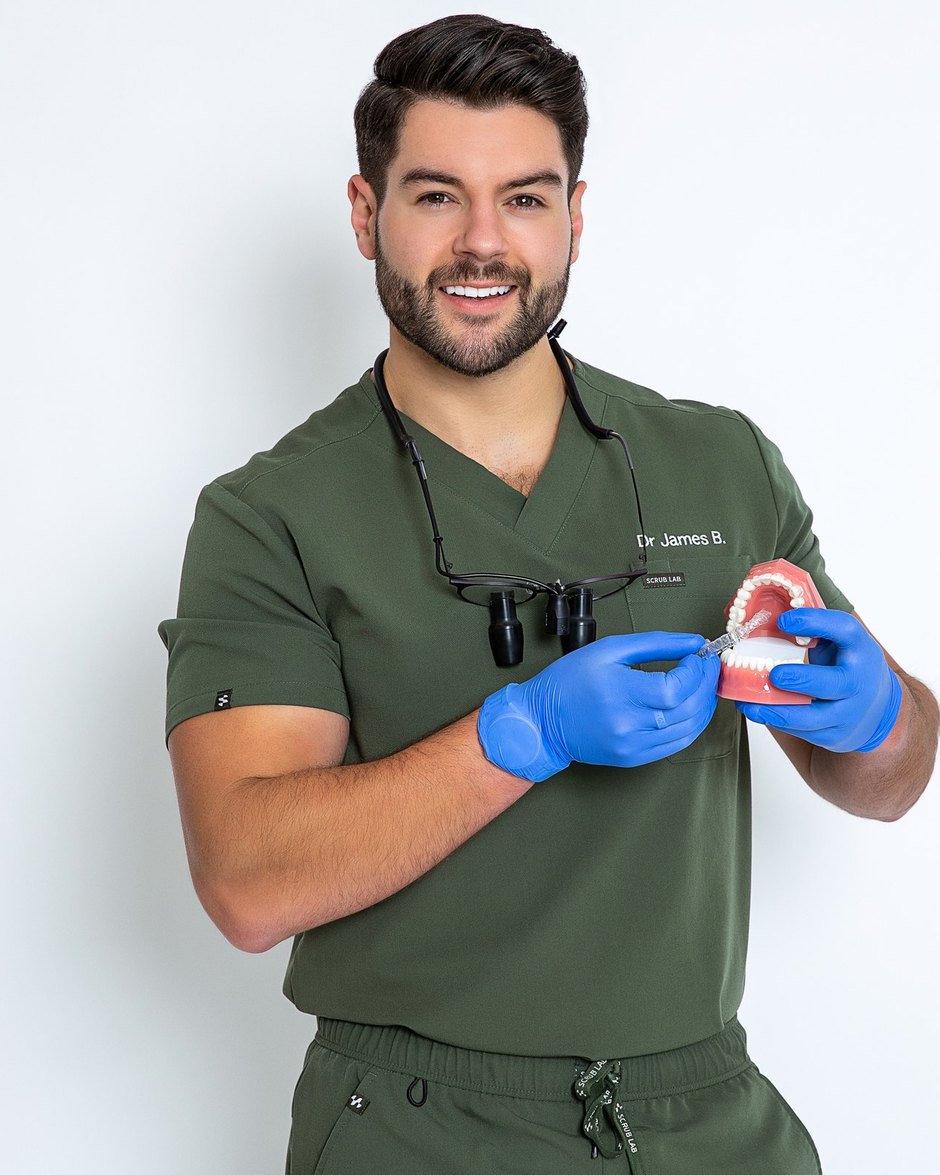
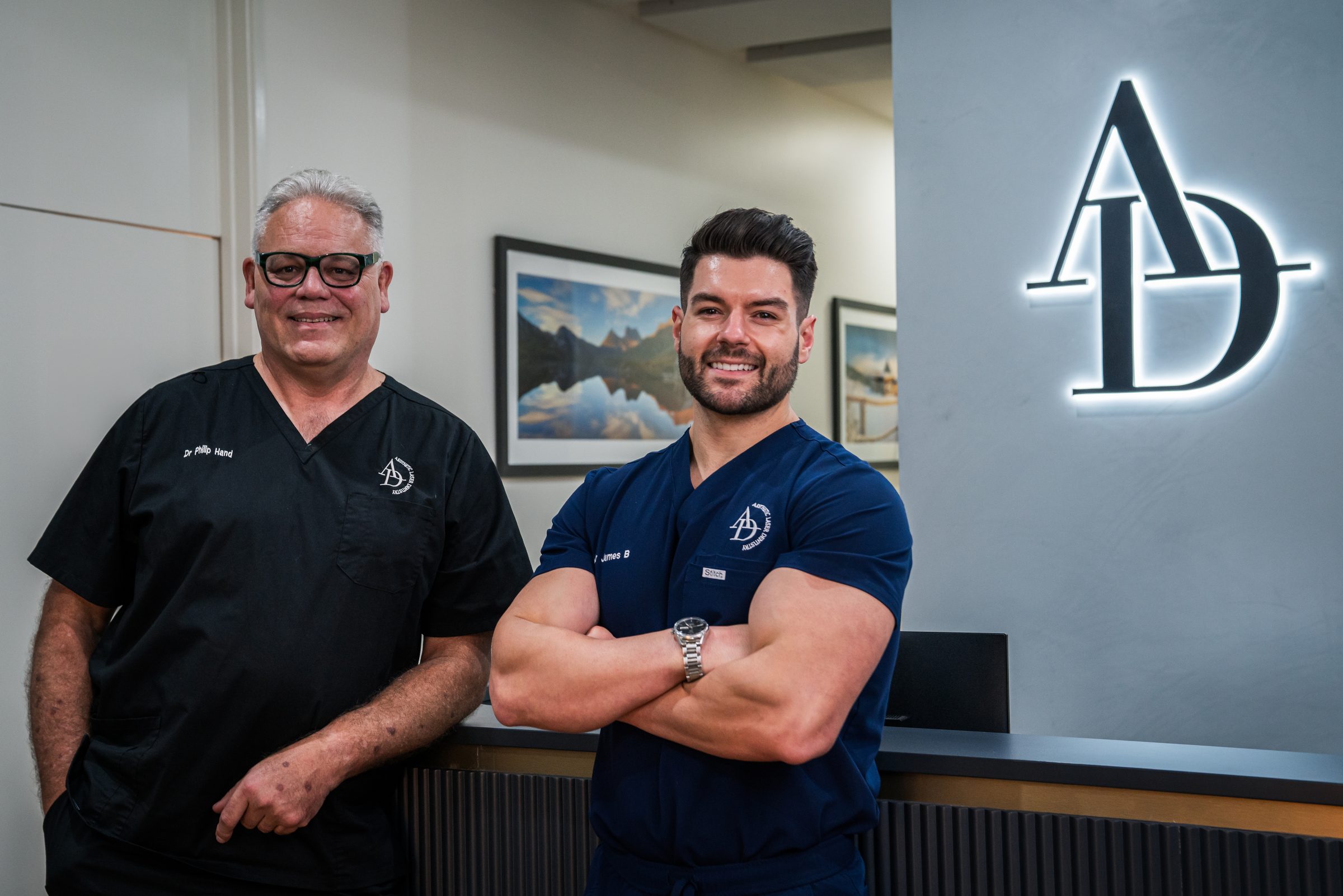
Worn teeth are assessed as part of general dental care at the practice. Dr James Bartalotta plans and treats full mouth rehabilitation, and the full mouth cases in our smile gallery are his.
Worn teeth questions.
Something not covered here? Call us on (03) 9330 2455 or email reception@aldclinic.com.au.
Can worn teeth grow back?
No. Enamel does not grow back, which is why we find the cause and protect the teeth, then rebuild what has been lost.
How long do composite build-ups last?
It varies with how much you grind, your bite and how the build-ups are looked after. Composite can chip or stain over time and can usually be repaired. Wearing your night splint helps protect it.
Do I need full mouth rehabilitation?
Most people do not. It is considered when the wear is advanced across many teeth, or the bite has collapsed. We will talk you through every option, from the smallest to the largest, before you decide.
Will my teeth look longer afterwards?
Rebuilding worn teeth usually restores some of the length that has been lost. The planned shape is shown digitally, and for larger cases tried in your mouth, before the final work is made.
Why do I need a splint after treatment?
If grinding helped wear your teeth down, it can wear or chip the new work too. A night splint takes that force instead.
Is it painful?
Composite build-ups often need little or no anaesthetic, because healthy tooth is not drilled away. Larger treatment is done with local anaesthetic, and we explain what to expect at each stage.

Book a worn teeth assessment.
We will look at the wear, work out why it is happening and talk through your options. 3/23 Louis St, Airport West, from 7:30am Monday to Friday.