
Laser dentistry
Laser gum depigmentation in Airport West
Laser lightening of dark or patchy gums, for people who choose it.
Gum depigmentation lightens dark or patchy gums by removing the thin pigmented layer of gum tissue, and at Aesthetic Laser Dentistry in Airport West it is done with a laser. Dark gums are usually a normal, healthy variation, so treatment is a personal choice rather than a medical need.
It is sometimes called gum bleaching or gum lightening, although no bleach is used.
A personal choice
Dark gums are usually normal
Usually one visit
Some people need a second
Fees
Quoted after an examination

Why are some gums darker than others?
A high level of melanin in the gums (gingival hyperpigmentation) is usually a normal, healthy variation and does not need treatment. Some people choose to have their gums lightened for personal reasons, and we can explain what that involves, including the risks.
Dark gums have several possible causes. Most are harmless, but some need a check-up first:
- Genetics. Natural gum colour is largely inherited.
- Smoking, which can darken the gums over time.
- Some medicines and medical conditions.
- A single dark spot, which can come from an old filling or, rarely, something that needs further tests.
A dark patch that is new, changing or on its own should always be checked before any cosmetic treatment.
Pigment, which sits in the thin outer layer of the gum
The layer the laser removes
The gum beneath, where new, usually lighter tissue grows as it heals
Illustration, not a patient photograph.
Who is gum depigmentation for?
It may suit
Adults with healthy gums who would like a lighter or more even gum colour, once we have checked that the pigment is harmless.
It is not suitable when
Gum disease has changed the gum colour. The gum disease is treated first.
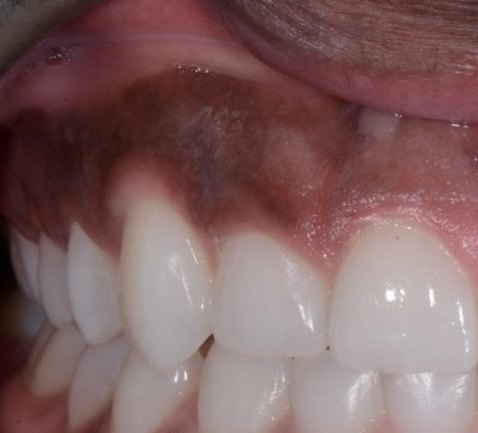
Before
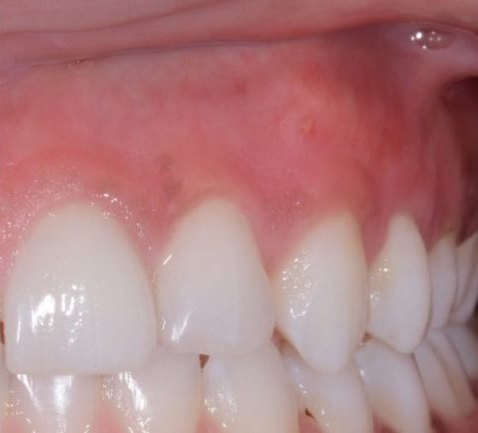
After
Gum depigmentation
Treated by Dr Philip Hand
After photo taken 2 weeks after treatment
Treatment performed by Dr Philip Hand (Dentist), AHPRA Registration No: DEN0000982631. The results shown here are specific to this individual patient and will not be the same for everyone, as outcomes can vary depending on a person’s unique dental health and circumstances. This case is shared with the patient’s written consent. These images are shown for educational purposes only, to illustrate what treatment can involve.These images are unedited and taken under consistent conditions to accurately reflect the outcome of treatment. This post is intended as general information only and should not be relied upon as a substitute for a personalised consultation. We always recommend that individuals seek a professional dental consultation to assess their suitability for treatment, and you are entitled to seek a second opinion from another registered health practitioner before making any decisions about your care.
How laser gum depigmentation is done.
It starts with a consultation to check the cause of the colour. The treatment itself is usually done in one appointment, with local anaesthetic.
1
Consultation
We examine your gums, check the cause of the colour, and talk through what is realistic, the risks and the alternatives.
2
Numbing
Local anaesthetic is used.
3
During treatment
The laser removes the thin pigmented layer of the gum. New tissue grows back as the gum heals and is usually lighter in colour.
4
After treatment
The gums look red or white while they heal. The final colour shows once healing is complete, usually after a few weeks.
What to expect
Usually one appointment
Treatment is usually done in a single visit, although some people need a second.
No scalpel
The laser removes a thin layer of gum without a scalpel, and stitches are not usually needed.
Comfort
Local anaesthetic is used, and most people have mild soreness for a few days afterwards.
What is recovery like?
- Choose soft, cool foods while the gums are tender
- Brush gently and follow your aftercare instructions
- Avoid smoking while the gums heal
- Call us on (03) 9330 2455 if pain gets worse, bleeding does not settle or anything seems unusual
How long do the results last?
Results vary, and pigmentation can return over time, particularly in people who smoke. If it does return, treatment can be repeated.
What are the risks and side effects?
Possible side effects include sensitivity, swelling, discomfort, redness or irritation of the gums while they heal, infection, and pigment returning over time. We will explain the risks that apply to you and give you aftercare instructions.
What are the alternatives?
Other options include removing the pigmented layer with a scalpel, cryosurgery (freezing), and gum grafting. Talk to your dentist before trying any of these options.
Scalpel
Conventional surgical depigmentation removes the pigmented layer of gum with a scalpel instead of a laser.
Cryosurgery
The pigmented tissue is frozen so the layer comes away as it heals.
Gum grafting
Tissue without pigment is taken from the roof of the mouth and placed over the dark area. It covers the pigment rather than removing it.
Choosing not to treat is also an option, as dark gums are usually normal.
Your dentist
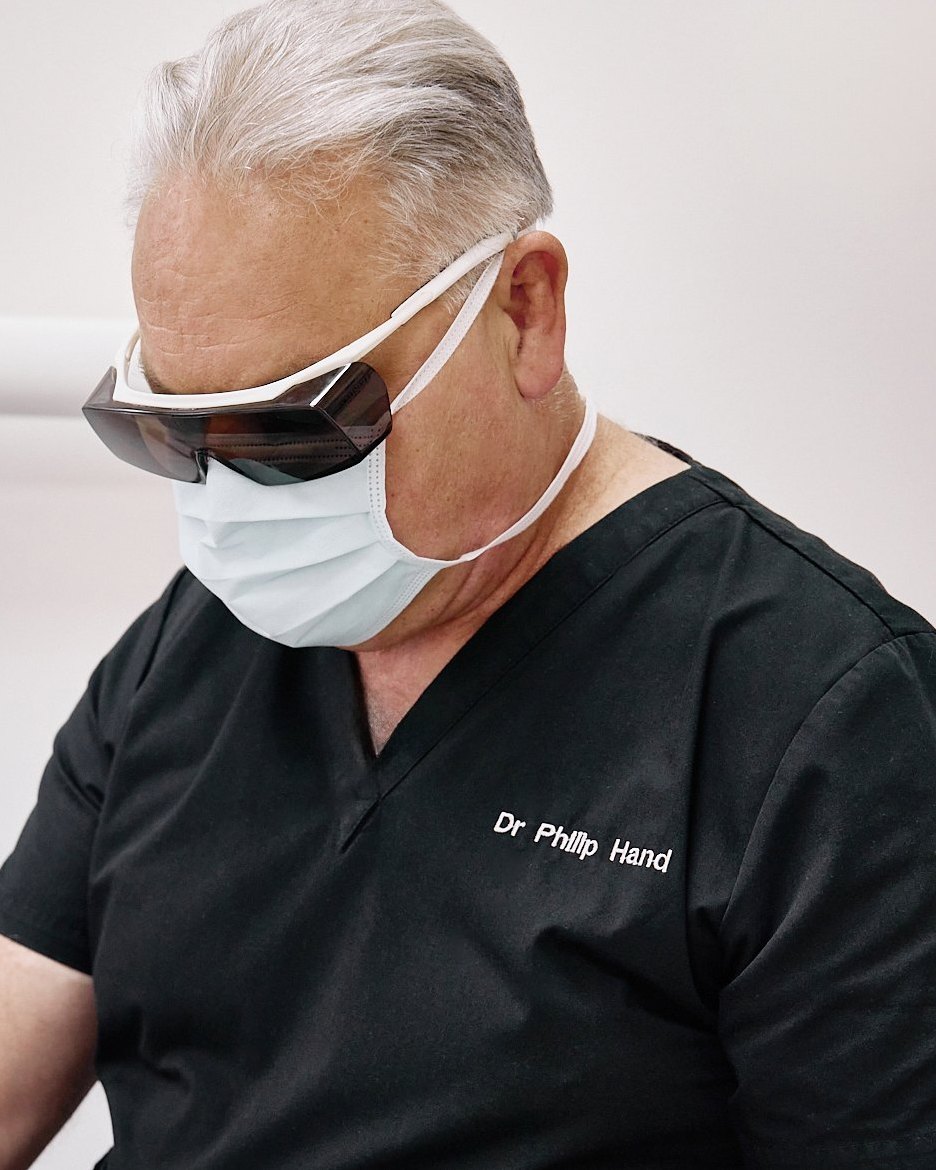
Gum depigmentation with Dr Philip Hand
Principal dentist
Dr Hand has used dental lasers since 2010, holds an International Master’s Degree in Laser Dentistry from Università Cattolica del Sacro Cuore in Rome, and trains Australian and overseas dentists in laser use.
- International Master’s Degree in Laser Dentistry, Rome
- BDS, Otago, and a dentist for more than 40 years
- General registration, AHPRA DEN0000982631
Gum depigmentation questions.
Something not covered here? Call us on (03) 9330 2455 or email reception@aldclinic.com.au.
Are dark gums a sign of a problem?
Usually not. Dark gums are most often a normal, healthy variation caused by melanin. A dark patch that is new, changing or on its own should be checked by a dentist.
Is gum depigmentation permanent?
Not always. Results vary, and pigmentation can return over time, particularly in people who smoke. Treatment can be repeated if it does.
How many visits will I need?
Treatment is usually done in a single visit, although some people need a second, depending on how much pigment there is and how the gums heal.
Is laser gum depigmentation painful?
Local anaesthetic is used during treatment. Most people have mild soreness for a few days afterwards, and your dentist will advise on pain relief.
What are the alternatives to laser gum depigmentation?
Other options include removing the pigmented layer with a scalpel, cryosurgery (freezing), and gum grafting. Choosing not to treat is also an option, as dark gums are usually normal.
How much does gum depigmentation cost?
Fees are quoted after an examination, because they depend on how much of the gum is treated and how many visits you need. HICAPS claims can be made on the day, and humm payment plans are available. Any rebate depends on your fund and level of cover.

Talk to us about gum depigmentation.
Book a gum depigmentation consultation with Dr Philip Hand at 3/23 Louis St, Airport West. Appointments from 7:30am, Monday to Friday.